

Talk to any VFX artist about what actually derails a project, and you’ll hear the same complaints over and over. It’s rarely a creative disagreement. Usually it’s a render that dies at 90%, a simulation that locks up overnight, or a machine that can’t get through a heavy scene without choking. Shots keep getting more complex. Deadlines don’t move. So when the hardware can’t keep pace, someone ends up working the weekend to catch up.
The Real Cost of Slow Renders and Crashed Sessions
Lost render time doesn’t just disappear quietly. Someone has to absorb it, usually the artist staying late or the supervisor explaining to a client why a shot isn’t ready. Do this across a whole team on a feature or a game cinematic, and the hours add up faster than most studios like to admit. It’s part of why more teams are ditching general-purpose PCs for something built specifically for the job. A properly configured SideFX Houdini Standard Edition workstation handles simulation-heavy work the way it’s supposed to, so artists aren’t fighting their own hardware just to hit a deadline.
Where Most Studios Lose Time Without Realizing It
The delays that hurt the most aren’t usually one dramatic failure. They’re small, boring inefficiencies that quietly chip away at a schedule week after week:
- A GPU that struggles the moment a particle or fluid sim gets complicated
- Not enough RAM, so big scenes crash on load
- Storage that can’t keep up, so assets stream in slowly
- Cooling that throttles the system halfway through an overnight render
- Driver mismatches that cause random software conflicts
None of this shows up in a pitch deck or a demo reel. Nobody puts “cooling throttled our render” in a project retrospective. But studios that actually dig into their pipeline numbers usually find the bottleneck isn’t the artists. It’s the machines.

Hardware Built for Long Render Queues, Not Just Benchmarks
Benchmarks are great for marketing. They mean almost nothing for actual production work. A GPU that runs beautifully for ten minutes and then throttles under a sustained load isn’t fast, not in any way that matters to a studio. VFX work is hours of continuous strain, sometimes running through the night or across a full weekend without anyone touching the machine. That’s a different kind of demand, and it’s the reason a SideFX Houdini Karma AMD Ryzen workstation is built the way it is, with enough thermal headroom to keep pushing through a render queue without stalling out at 2 a.m.
There’s also a side effect people don’t talk about much: iteration speed changes how artists work. If a lighting pass takes twenty minutes instead of two hours, an artist can actually try three or four versions before committing. That extra room to experiment tends to show up in the final shot, even though it started as nothing more than a hardware upgrade.
Stability Is a Creative Decision, Not Just an IT One
It’s tempting to file stability under “IT’s problem.” In VFX, instability has a way of showing up right in front of the client. A crash mid-review. A cache file that corrupts and forces a render to start over. These things cost more than time; they chip away at how confident a client feels about the studio they hired, even if nobody says it out loud.
Solid hardware takes that risk off the table before it becomes a problem. Artists stop hitting save every ninety seconds out of paranoia. Supervisors stop building in extra buffer days just in case a machine acts up. Studios stop burning billable hours on troubleshooting instead of actual production work. None of that is really about tech specs. It’s about whether a studio looks like it has its act together.
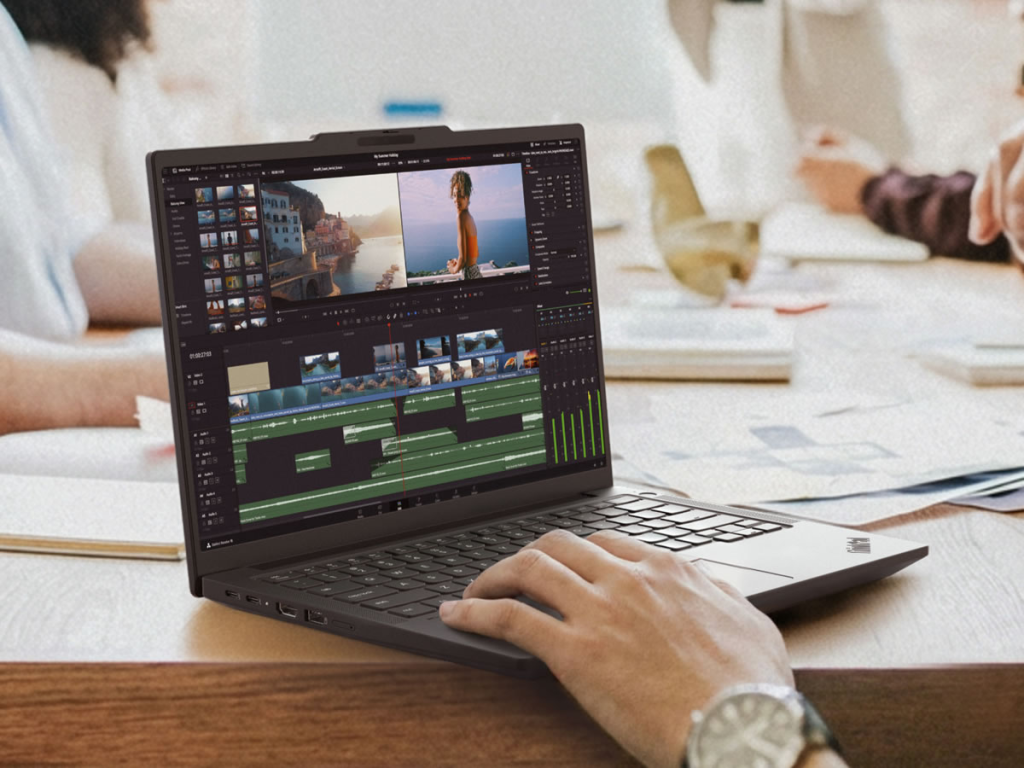
Getting the Setup Right the First Time
Nobody wants to rebuild their workstation fleet every year, so the upfront decision matters more than it seems. It also helps to work with people who actually understand the software being used day to day, not just generic PC specs pulled from a catalog. That’s the gap Cloud Ninjas set out to close, building configurations around how studios actually work rather than a one-size-fits-all box. Speed and stability aren’t things you bolt on after the fact. They shape how the whole project moves, from the first test simulation to the shot that finally ships.