

Official service: Proxyline
International SEO evidence is noisy. Search history, query language, device, domain, data center and consent state may alter results, so a proxy should be one controlled input—not the entire methodology.
For this use case, Proxyline is most relevant as a controllable network or server input—not as proof that every observed result is universal. HTTP and SOCKS5 credentials are issued together for compatible plans. Manual IP, subnet and city selection is available, with more than 4,700 published networks and subnets.
Quick facts
| Best for | international SEO consultants, in-house search teams and content strategists |
| Primary goal | audit how public search and landing-page experiences differ across target markets |
| Service type | Dedicated and shared IPv4 proxies, IPv6/32 proxies and MTProto proxy options |
| Useful published strengths | granular endpoint selection, large published network/subnet variety, HTTP/SOCKS5 compatibility, API and renewal controls |
| Responsible-use note | Use only for lawful, authorized work and follow the rules of websites, networks, employers, platforms and jurisdictions involved. |
Why Proxyline fits this use case
The practical value comes from granular endpoint selection and large published network/subnet variety. These features can make audit how public search and landing-page experiences differ across target markets easier to document and repeat. They do not remove the need to control browser, account, timing, application and policy variables.
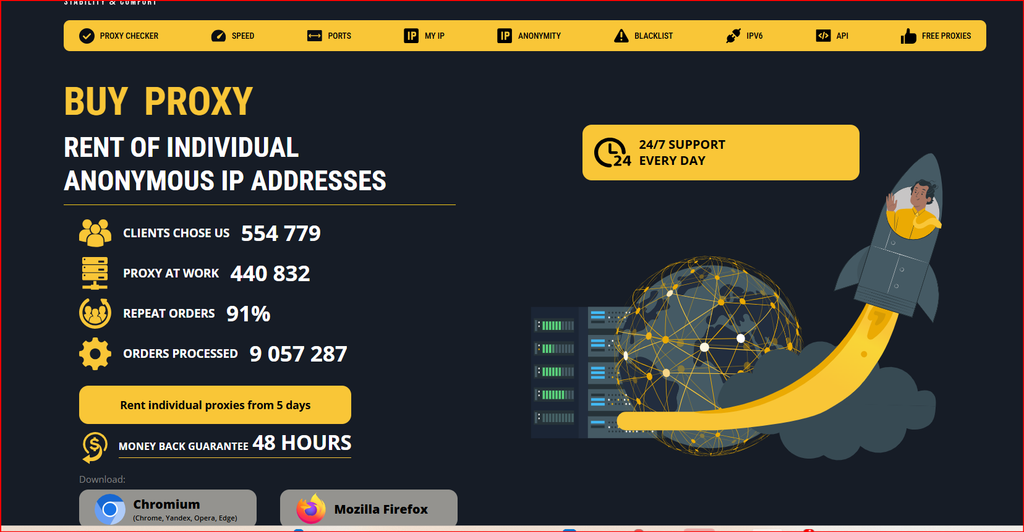
The provider publishes API access, instant activation, unlimited traffic and IP-based authorization for up to three addresses per order. Orders can start with one IP for five days, and the provider publishes 24/7 support plus a 48-hour refund or address-replacement window. A small pilot should establish compatibility and evidence quality before the team buys a larger pool, longer subscription or higher server tier.
Plan the project before buying
- Choose queries by commercial intent and local language.
- Record the search engine, domain and device type.
- Map each query to the correct localized landing page.
- Define whether the audit concerns rankings, indexing, redirects or content parity.
Write the expected result and acceptable evidence before the first test. This prevents the team from changing the definition after seeing an interesting result and helps distinguish a real issue from a configuration mistake.
Step-by-step workflow
- Build a query-market matrix with a small, representative sample.
- Assign stable regional endpoints and preserve the exact browser configuration.
- Run searches in signed-out clean sessions and note personalization warnings.
- Capture result type, visible position range, title, snippet and destination URL.
- Open landing pages to verify canonical, hreflang, language, currency and redirect behavior.
- Repeat priority queries on another day before labeling a movement as persistent.
- Turn findings into technical, content and measurement actions rather than a single rank score.
Practical scenarios
Hreflang review. Check whether the correct regional URL is surfaced and whether users are redirected appropriately.
Local landing pages. Compare public copy, offers and internal links.
SERP feature coverage. Record maps, shopping, video or answer features that change the competitive field.
Migration checks. Verify that old country URLs resolve to the intended replacements.
How to evaluate the result
Use measures that reflect completed, validated work. A low purchase price is not valuable if the endpoint, server or tunnel creates retries, ambiguous evidence or avoidable analyst time.
| Measure | What to record |
|---|---|
| Correct URL rate | Queries surfacing intended local page |
| Redirect accuracy | Regional redirects matching specification |
| Feature presence | Relevant SERP features observed |
| Repeat stability | Findings reproduced on later run |
| Actionability | Findings mapped to an owner and fix |
What to check before you rely on it
- Do not report an exact “true rank” from one observation.
- Keep query language and search domain consistent.
- Separate indexing defects from ranking competition.
- Use official search-console data for owned-site performance.
- Follow search-engine terms and avoid excessive automated querying.
Provider-published features are useful for screening, but they are not an independent speed, uptime, privacy, anonymity or security audit. Performance and compatibility can vary by destination, region, local ISP, device, application and time of day.
Pricing & value
| The published USD grid currently lists shared IPv4 from $0.67 per IP for five days or $0.99 for 30 days. Individual IPv4 for 1-20 addresses is shown from $0.96 for five days or $1.77 for 30 days; larger quantities reduce the per-IP rate. IPv6/32 starts from $0.10 for five days or $0.51 for 30 days for 1-99 addresses. Country, quantity, duration and availability can change the checkout total. Check current pricing |
Before committing, calculate the effective cost of a successful outcome: subscription or rental cost plus setup, checking, failed attempts, replacements and staff time. Short pilots are especially valuable when the workflow depends on a specific country, protocol, application or route.
Advantages and tradeoffs
- Useful screening case: granular endpoint selection and large published network/subnet variety.
- Operational option: HTTP/SOCKS5 compatibility.
- The service can be tested on a narrow scope before broader rollout.
- Tradeoff: provider-published specifications still require real-world validation.
- Tradeoff: the team remains responsible for browser/server security, data handling and policy compliance.
Frequently asked questions
Is a regional proxy enough for an SEO audit?
No. Combine observations with first-party analytics, search-console data, crawl results and server logs.
How many markets should be tested?
Start with revenue-critical markets and a representative query set, then expand where evidence justifies it.
Why use repeatable endpoints?
They reduce one source of variation and make follow-up investigation easier.
Bottom line
Proxyline can be a practical option for teams that need to audit how public search and landing-page experiences differ across target markets. Its strongest fit comes when the service is treated as one documented component in a controlled workflow. Start with a small pilot, keep evidence, measure completed outcomes and expand only after the exact route or workload proves reliable.
Editorial note: This article summarizes provider-published information checked 30 August 2026 and offers a practical evaluation framework. Features, inventory and prices may change. It is not an independent performance or security audit.