

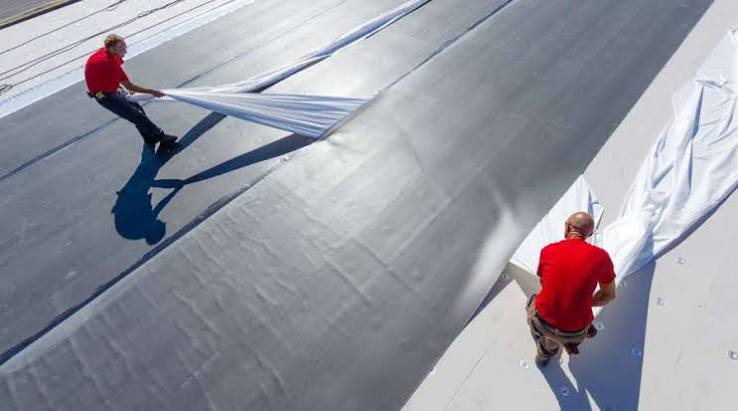
When people think about an EPDM commercial roofing system, they usually focus on the rubber membrane itself. However, one of the most important parts of a successful installation is the adhesive that bonds the membrane to the roof. One commonly used product is white bonding adhesive, which helps create a strong, durable attachment between the EPDM membrane and the roofing substrate.
White bonding adhesive is typically used on fully adhered EPDM roofing systems. Instead of mechanically fastening the entire membrane, the adhesive securely bonds the EPDM rubber to approved insulation boards, cover boards, or other suitable substrates. This creates a smooth, secure roofing system that performs well in a wide range of weather conditions.
One of the biggest advantages of a fully adhered EPDM system is its excellent wind performance. Because the membrane is bonded across the roof surface, it helps resist wind uplift while creating a clean, uniform appearance. This makes fully adhered EPDM a popular choice for office buildings, warehouses, schools, churches, healthcare facilities, and many other commercial properties.
Before applying white bonding adhesive, the roof surface must be properly prepared. Contractors carefully clean the substrate, remove dust and debris, and verify that the insulation and cover boards are securely attached. Surface preparation is one of the most important steps because proper adhesion depends on a clean, dry surface.
The adhesive is applied according to the manufacturer’s specifications using approved rollers or spray equipment. Both the substrate and the back of the EPDM membrane are typically coated before the membrane is carefully positioned and rolled into place. Roofing crews then use heavy rollers to remove trapped air and ensure full contact between the membrane and the adhesive.
Temperature and weather conditions are also important during installation. Professional commercial roofing contractors follow manufacturer recommendations regarding application temperatures, drying times, and weather limitations. These guidelines help ensure the adhesive develops the proper bond for long-term performance.
Using the correct amount of adhesive is just as important as using the right product. Applying too little may reduce the bond strength, while excessive adhesive can create installation issues. Experienced roofing professionals carefully follow the manufacturer’s coverage rates to achieve the best results.
White bonding adhesive is only one part of a complete EPDM roofing system. Proper insulation, cover boards, flashing, seam tape, edge metal, drainage, and roof penetrations must all be installed correctly to create a watertight commercial roofing system.
At S&K Commercial Roofing, we understand that every component matters—from the roof deck all the way to the finished EPDM membrane. Using premium adhesives, quality materials, and manufacturer-approved installation methods helps ensure every commercial roof replacement delivers the durability, performance, and weather protection building owners expect for decades to come.