

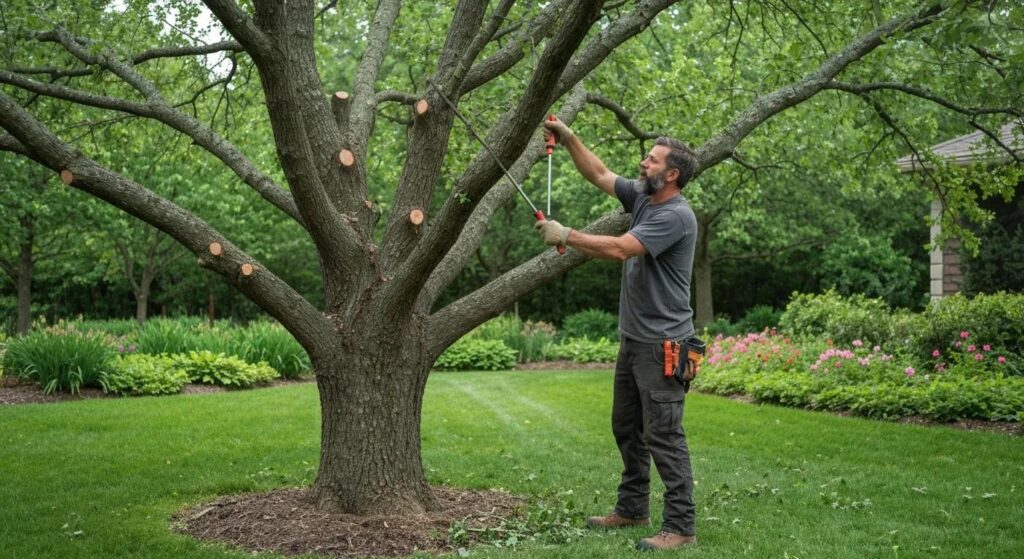
Trees have a way of making a place feel settled. A gum in the yard, a jacaranda along the fence, a shady old fig near the driveway, they all bring character. But every now and then, a tree stops being a comfort and starts looking a bit suspicious. Not every crook in the trunk spells trouble, and not every leaf drop means panic. Still, there are a few signs that deserve a proper look before the next storm gives things a nudge.
In Australia, that matters even more. A hot summer, dry winds, sudden downpours, and the odd wild gust can turn a weak tree into a real headache. Branches over the roof, roots lifting paths, or a trunk that looks like it has seen better days, these are the kinds of things that can go from minor annoyance to costly damage rather quickly. A quick check now can save a lot of grief later. And yes, a tree might look calm and dignified while quietly being a bit of a menace. Nature has a sense of humour like that.
What makes a tree hazardous?
A hazardous tree is one that has a higher chance of failing and causing harm. That failure might be a falling branch, a split trunk, a toppled root system, or a tree leaning into a spot where it really ought not be. The danger is not always obvious at first glance. Some trees look fine from the street and still have hidden issues at the base or inside the trunk.
In suburbia, the risk is often about location as much as health. A tree near power lines, close to a house, above a garage, or hanging over a footpath carries more concern than one standing in the middle of a wide open block. In regional parts of Australia, old shelter belts and windbreaks can also become risky when age and weather wear them down.
Early warning signs to keep an eye on
1. Cracks in the trunk or major limbs
Long splits or deep cracks are never a lovely sight. A small surface mark may be harmless, but a gaping crack through the trunk or into a main branch can signal structural weakness. After strong winds, these cracks can widen. If the bark is splitting and the wood underneath looks exposed, that tree deserves attention.
2. Fungi growing at the base
Mushrooms or bracket fungi around the base of a tree can point to internal decay. Not every fungus is a disaster, of course. Some are harmless little guests. Yet if mushrooms keep appearing, especially near the trunk flare or on roots, that may mean the wood inside is rotting. A tree can look sturdy from a distance and still have mush where strength ought to be.
3. Dead or hanging branches
Dead branches are one of the easiest warning signs to spot. They may have no leaves when the rest of the tree is healthy, or they might snap when touched. Hanging branches, often called widow-makers by arborists, are the sort that sit above you looking innocent until the wrong breeze shakes them loose. Not exactly the sort of guest you want overhead during a barbecue.
4. Leaning that seems to get worse
Some trees naturally grow on an angle, especially in exposed coastal or windy areas. That alone is not always a problem. Trouble begins when a tree that used to stand upright starts leaning more than it once did, or when the soil at the base shifts. Freshly exposed roots, lifted earth, or a sudden tilt after rain can all point to instability.
5. Hollow trunk or cavity
A hollow tree can still live for years, depending on the species and how much sound wood remains. Even so, a large cavity, especially one that extends deep into the trunk, can weaken the tree’s structure. If you tap the trunk and it sounds unusually empty, or you can see daylight through a split, that is worth getting checked.
6. Roots causing upheaval
Roots do not always stay neatly out of sight. They can push up paths, crack retaining walls, and interfere with drains. More worrying is when the soil around the roots looks disturbed or soft. A tree with compromised roots may not hold as securely as it once did, particularly after heavy rain or a bit of a blow from the southerlies.
7. Lots of leaf drop or thinning canopy
Every tree sheds leaves at some point, but a sudden or unusual amount of drop can signal stress. If the canopy is thinning out, patchy, or looking sparse in places where it used to be full, the tree may be struggling with disease, root damage, or lack of water. In many Australian gardens, drought stress is a common culprit, and trees do not always recover gracefully.
When a tree changes after weather
Weather can expose problems that were already there. A tree might sit quietly for years and then after one storm, it starts dropping limbs or leaning more than before. Summer heat can dry the soil and weaken roots, while heavy rain can loosen a tree that was already unsteady. Coastal areas have their own challenges too, with salty winds taking a toll over time.
If a tree starts shedding large branches after wind, or if the ground around it looks disturbed after a downpour, take that seriously. A small change can be the first sign of a bigger issue. That is usually the point where people start googling, phoning around, and wondering if they have been ignoring the obvious for too long. Happens all the time.
When to get a professional opinion
If a tree is near your home, your neighbour’s fence, a shed, or public space, and you spot any of the signs above, it is worth having it assessed. A qualified arborist can check the trunk, branches, canopy, and root zone, then explain whether the tree is sound, needs pruning, or may need tree removal. That kind of advice is especially handy when the tree is large, hard to reach, or sitting right where a bit of bad luck could become very expensive.
In many Australian neighbourhoods, councils also have rules around protected trees and permits, so it pays to know where you stand before doing anything drastic. A professional can help separate a genuine hazard from a tree that just looks a bit untidy after a rough season.
Simple checks you can do from the ground
You do not need climbing gear or a chainsaw to spot the early signs. A sensible walk around the tree usually tells you plenty. Look up at the canopy and down at the base. Check for:
- dead or hanging branches
- fresh cracks in trunk or limbs
- mushrooms near the base
- soil lifting or heaving around roots
- leaning that has changed recently
- damage after storms or strong winds
If something looks odd, trust your instinct. Trees may be slow-moving, but trouble around them often moves fast once the weather turns.
Why acting early saves stress later
Waiting rarely improves a risky tree. A branch that looks tired today may be on the ground tomorrow. A shallow crack may turn into a split after the next storm. Even if the tree ends up being fine, getting it checked can give peace of mind. That is worth a fair bit when the forecast starts sounding ugly.
For homeowners, landlords, and property managers, tree safety is part of keeping the place in good shape. It protects buildings, cars, footpaths, and people. It also keeps the garden from turning into a future insurance drama, which is a headache nobody asked for.
A closer look beats a lucky guess
Hazardous trees often give off small clues before they become a serious issue. Cracks, fungi, dead limbs, leaning, root disturbance, and thinning foliage all deserve attention. Some trees will only need pruning or monitoring. Others may be too far gone. Either way, the safest move is to get an experienced eye on the problem before the tree gets a say in the matter.
Out in the Australian weather, trees cop plenty. Most cope well. A few, though, need a bit of scrutiny before they decide to make a dramatic exit during the next storm. Better a careful check now than a costly clean-up later.