

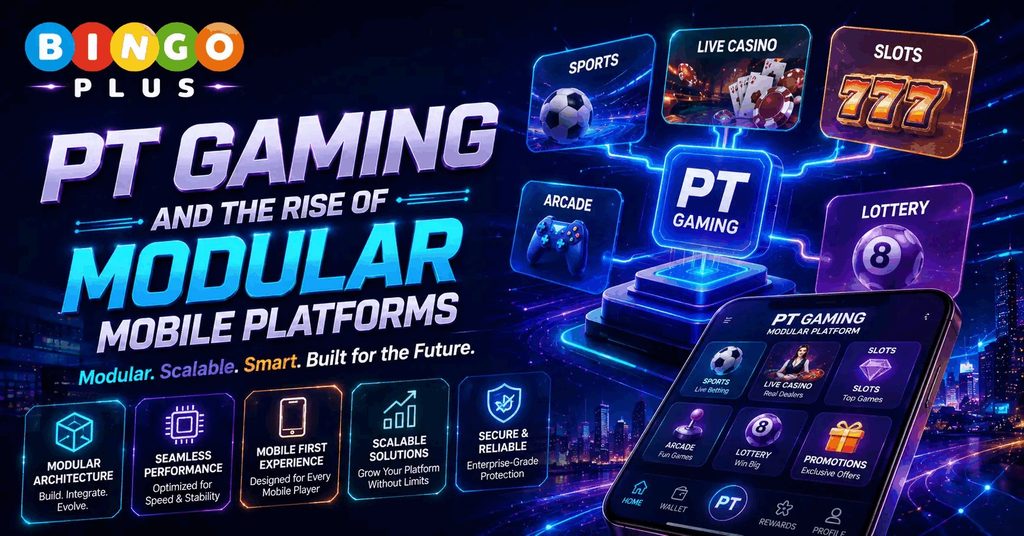
PT Gaming and the Rise of Modular Mobile Platforms
Digital entertainment platforms are becoming more complex, but the best user experiences often feel remarkably simple. A visitor opens a page, finds relevant content, signs in securely, and moves between services without noticing the technical systems operating in the background.
Creating that simplicity requires a flexible foundation. For PT Gaming, a modular mobile architecture can connect content delivery, account access, localization, customer support, and performance monitoring without turning the platform into a single system that is difficult to update. Each component can perform a defined role while still contributing to one consistent experience.
This approach gives product teams greater control over development and allows the platform to respond more efficiently to changing user expectations.
What Is a Modular Mobile Platform?
A modular platform separates major digital functions into manageable components. Instead of placing navigation, authentication, content, payments, notifications, analytics, and support inside one tightly connected application, the platform organizes them as services with clear responsibilities.
These services communicate through controlled interfaces, commonly known as application programming interfaces or APIs. When one module needs improvement, developers can update it without rebuilding the entire product.
A typical modular ecosystem may include:
- User identity and authentication
- Mobile content delivery
- Search and recommendations
- Localization services
- Customer-support tools
- Notification management
- Security monitoring
- Performance analytics
- Responsible participation features
For PT Gaming, this structure could make the digital product easier to maintain while reducing the risk that a single technical problem will affect every part of the user journey.
Why Monolithic Systems Become Difficult to Manage
A monolithic application may work effectively during its early stages. As features accumulate, however, its internal dependencies can become increasingly complicated.
A minor interface change may require updates across several unrelated areas. A problem in one service can interrupt the entire application. Development teams may also struggle to release improvements quickly because every change must be tested against the full system.
Mobile users rarely see these architectural challenges directly. They experience the consequences through slow pages, unavailable functions, inconsistent information, or delayed updates.
Modularity helps reduce these risks. It creates clearer boundaries between functions, allowing technical teams to test, monitor, and scale individual services according to demand.
Creating a Consistent PT Gaming Experience
A modular system should not produce a fragmented interface. Users should experience one coherent platform even when several independent services are operating behind it.
Consistency begins with a shared design system. Colors, typography, buttons, navigation patterns, error messages, and accessibility rules should follow the same standards across every component.
A central design system can provide reusable interface elements for product teams. When a button, form, or notification pattern is improved, the updated component can be distributed across relevant areas.
PT Gaming can also define common content standards. Instructions should use the same terminology, tone, and formatting wherever they appear. If one page uses different language for an account function than another page, users may assume that the two functions are unrelated.
Technical flexibility is valuable, but visual and linguistic consistency is what makes that flexibility understandable to the audience.
Designing Mobile-First Content Delivery
Mobile performance depends on more than internet speed. Page weight, image formats, scripts, server response times, and third-party services all influence how quickly a page becomes useful.
A modular content-delivery system can prioritize essential information. Text, navigation, and primary actions may load first, while nonessential visual elements arrive later. This progressive approach gives users something meaningful to interact with instead of forcing them to wait for an entire page.
A content delivery network can also serve static resources from locations closer to users. Modern image formats, responsive image sizes, and intelligent caching can further reduce unnecessary data transfer.
For PT Gaming, performance should be measured on real devices and realistic mobile connections. A page that performs well on a development computer may behave differently on an entry-level smartphone or an unstable network.
Performance engineering is therefore part of the user experience rather than merely a technical exercise.
Making Account Access a Dedicated Service
Authentication is one of the most sensitive components of any digital platform. It must protect user accounts while keeping legitimate access understandable.
A dedicated identity service can manage login, password recovery, session control, verification, and suspicious-access detection. Other platform modules can rely on this service instead of building separate account processes.
This arrangement creates several advantages. Security policies can be applied consistently, account-related improvements can be deployed centrally, and unusual activity can be monitored more effectively.
Clear communication remains essential. If a login attempt requires an additional security check, the interface should explain why it is necessary and what the user should do next. Generic error messages such as “something went wrong” offer little help.
PT Gaming can improve confidence by combining strong safeguards with concise instructions, reliable recovery options, and visible access to customer support.
Supporting Local Languages and Regional Context
Localization is not simply the translation of individual words. It also involves date formats, currency presentation, cultural context, device behavior, connection conditions, and the way users search for information.
A modular localization service can store approved terminology and deliver the correct content for each supported audience. This reduces the chance that different areas of the platform will use inconsistent translations.
Regional content should also be reviewed by people who understand the local audience. Automated translation may accelerate an initial workflow, but human review is important for clarity and cultural suitability.
PT Gaming can use regional search patterns and aggregated support questions to identify terminology that users naturally recognize. The final interface should remain concise, especially on smaller screens where long text can make navigation harder.
Connecting Search With User Intent
Internal search is often treated as a secondary feature, yet it provides direct evidence of what visitors want. Search queries can reveal missing information, confusing navigation labels, and changing user interests.
A modular search service can index content from different parts of the platform while presenting results through one interface. It may recognize spelling variations, synonyms, and common phrase patterns so that users do not need to enter an exact page title.
Search results should also explain their relevance. Useful category labels, short descriptions, and updated timestamps can help visitors choose the correct destination.
When no exact result exists, the platform should offer related topics or support routes. An empty page creates a dead end, while guided alternatives keep the user journey productive.
Improving Reliability Through Independent Services
Digital traffic rarely remains constant. A campaign, announcement, scheduled event, or popular release can create a sudden increase in visits.
In a modular architecture, high-demand services can be scaled independently. If search traffic increases, the search infrastructure can receive additional resources without expanding every other component.
The same principle supports fault isolation. If a recommendation service becomes temporarily unavailable, essential account and information functions may continue operating. The interface can hide the unavailable feature or display a useful fallback instead of failing completely.
Monitoring should be built into every critical module. Teams need visibility into response times, error rates, failed requests, and unusual traffic patterns. Automated alerts can help engineers investigate a problem before it develops into a widespread interruption.
For PT Gaming, resilience means protecting the continuity of important user tasks even when one component encounters difficulty.
Using Analytics Without Creating Data Excess
Analytics should answer specific product questions. Collecting every possible interaction creates more complexity and may introduce unnecessary privacy risks.
A focused measurement framework might examine:
- Successful account access
- Search completion rates
- Mobile loading performance
- Navigation errors
- Support escalation rates
- Notification preferences
- Accessibility issues
- Content freshness
- Service availability
These measurements can reveal whether a feature is helping people complete a task. Raw page views are less informative when separated from user outcomes.
Data should be aggregated or anonymized where appropriate, retained only as long as necessary, and protected by access controls. Privacy notices should explain collection practices in language that ordinary users can understand.
A smaller, purposeful dataset is often more useful than a large collection of disconnected events.
Creating a More Useful Notification System
Notifications can help users receive important service information, but irrelevant or excessive messages quickly become disruptive.
A dedicated notification module can manage delivery channels, frequency limits, consent, and user preferences. It should distinguish between essential account messages and optional promotional communication.
Users should be able to decide which optional updates they receive. Preference controls should be easy to locate and should take effect promptly.
The platform can evaluate notification quality through delivery rates, interaction rates, opt-out patterns, and support feedback. A high opt-out rate may indicate that messages are too frequent, poorly timed, or insufficiently relevant.
PT Gaming can strengthen long-term engagement by treating attention as something to respect rather than an unlimited resource.
Integrating Human and Automated Support
Automated systems are effective for predictable questions, but they cannot replace human assistance in every situation.
A modular support platform can begin with searchable help content or an automated assistant. If the issue remains unresolved, the conversation can move to a trained representative.
With suitable consent and access controls, the representative may receive relevant context about the current issue. This helps prevent the user from repeating the same details at every stage.
Support interactions can also inform product development. If many visitors ask how to complete the same action, the underlying interface may require improvement. The most efficient solution may be to remove the source of confusion rather than automate another answer.
Building Semantic Authority Around PT Gaming
Search visibility depends on useful topical coverage, not repeated use of a single phrase. A strong content ecosystem should explain the brand and the subjects closely connected with its digital experience.
Relevant semantic themes may include mobile access, account security, platform performance, customer support, localized services, privacy controls, and responsible participation.
Readers seeking additional background can consult this contextual resource about PT Gaming, which fits naturally within a broader discussion of branded access, mobile discovery, and user guidance rather than functioning as an isolated or repetitive link placement.
Supporting content should answer a distinct question on each page. Several near-identical articles competing for the same query can weaken topical clarity. A better structure assigns every page a defined search intent and connects related resources through descriptive internal links.
This approach helps search engines understand how individual pages contribute to a complete subject area.
Making Accessibility Part of Every Module
Accessibility should be included when each component is designed, not added after the platform is complete.
Shared interface components can establish baseline requirements for keyboard navigation, color contrast, readable text, descriptive form labels, visible focus states, and screen-reader compatibility.
However, reusable components still require testing within real user flows. An accessible button does not automatically make an entire registration or recovery process accessible.
PT Gaming should also consider users on older devices, slow connections, small screens, or browsers with limited capabilities. Lightweight alternatives and clear fallback messages help the platform serve a wider audience.
Inclusive design frequently improves usability for everyone because it encourages simpler navigation and clearer communication.
Keeping Responsible Participation Within the Architecture
Responsible participation should be integrated into the product structure. Relevant information, self-management tools, age requirements, and access to support resources should remain easy to locate.
These features should not depend on a single informational page. A modular system can surface appropriate guidance at relevant points in the journey while maintaining consistent language across channels.
Analytics and personalization must never be used to exploit vulnerable behavior. Entertainment should remain balanced, age-appropriate, and within personal limits; users remain responsible for their choices and should seek assistance if participation stops feeling controlled.
Embedding these principles into technical and editorial standards helps PT Gaming create a more transparent and sustainable digital environment.
A Platform That Can Evolve Without Losing Clarity
Modular architecture does not automatically create a good product. It succeeds only when technical independence is supported by common design standards, reliable governance, strong security, and a clear understanding of user needs.
For PT Gaming, the main advantage is adaptability. Individual services can improve as technology, audience expectations, and operational requirements evolve. The platform can introduce changes gradually instead of rebuilding every function at once.
Users do not need to understand the architecture behind the experience. They only need the platform to be fast, coherent, secure, and easy to navigate.
That is the real value of modular design: it allows complexity to exist behind the scenes while protecting simplicity at the surface.
Frequently Asked Questions
1. What is PT Gaming?
PT Gaming is a branded search topic associated with digital entertainment and mobile platform access. Users should verify current services, eligibility requirements, and official access details through reliable sources.
2. What is a modular mobile platform?
It is a platform divided into specialized components such as identity, content, search, notifications, analytics, and support. The components communicate through defined interfaces while remaining independently manageable.
3. Why would modular architecture benefit PT Gaming?
It could make the platform easier to update, scale, monitor, and maintain. A problem in one service may also be less likely to interrupt every other function.
4. Can modular systems improve mobile performance?
Yes. Teams can optimize resource delivery, caching, images, and scripts at the component level while prioritizing the information mobile users need first.
5. How can PT Gaming make account access safer?
A centralized identity service can support consistent verification, secure session management, recovery options, and suspicious-access monitoring across the platform.
6. Does personalization require extensive tracking?
No. Personalization can use limited contextual information or voluntarily selected preferences. Collection should be transparent, proportionate, and connected to a legitimate purpose.
7. Why is localization important for PT Gaming?
Localization helps a platform present language, formats, instructions, and support information that match the needs of regional users. It goes beyond direct word-for-word translation.
8. How should users approach gaming-related digital services?
Users should verify local eligibility and applicable rules, protect their account details, set personal time and spending limits, and participate only as a form of controlled entertainment.