

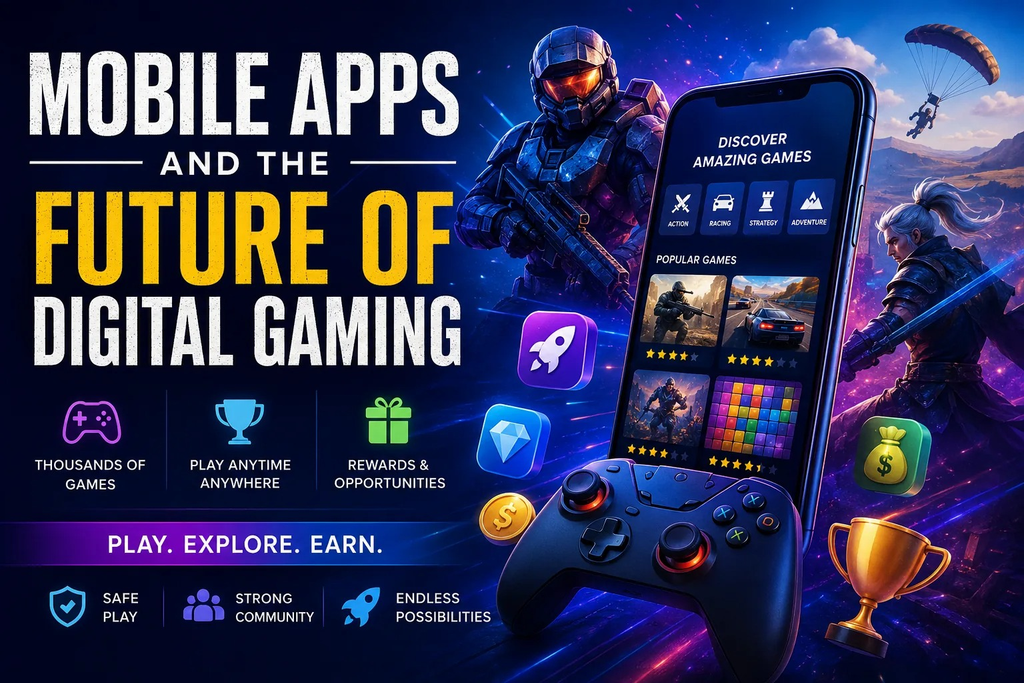
Mobile apps have changed the way people discover and enjoy digital games. With smartphones becoming more powerful and internet connections becoming faster, gaming is no longer limited to computers and consoles. Android users can now access thousands of games and applications directly from their phones, making mobile gaming one of the most convenient forms of digital entertainment.
The growing number of mobile applications has also created new opportunities for developers, gamers, and online communities. From traditional games to reward-based applications, the mobile ecosystem continues to expand and introduce new ways for people to interact with digital content.
The Growth of Mobile Gaming
One of the biggest advantages of mobile gaming is accessibility. Most people carry their smartphones with them throughout the day, allowing them to play games whenever they have free time. Unlike traditional gaming systems, mobile devices do not require a separate setup or dedicated space.
Android has become particularly important because of its large user base and wide range of applications. Players can find games covering almost every genre, including action, racing, sports, strategy, puzzles, simulation, and role-playing games.
For users who regularly explore new titles, websites that organize Android games and apps can make it easier to discover different applications and learn about their features before downloading them.
How Smartphones Are Improving Gaming
Smartphone technology has developed rapidly over the last few years. Modern devices come with faster processors, improved graphics capabilities, better displays, and more efficient operating systems. These improvements allow developers to create games with detailed graphics and smoother gameplay.
High-refresh-rate displays and better touch controls have also improved the experience, particularly for action and multiplayer games. Players can now enjoy responsive controls and detailed visuals without necessarily needing expensive gaming hardware.
Internet connectivity is another major factor. Online multiplayer games allow users to compete or cooperate with players from different locations. Faster mobile networks can provide more stable connections and reduce delays during online gameplay.
Discovering New Games and Applications
The growing number of applications can also make it difficult for users to decide what they should install. A game may look interesting from its title or screenshots, but users often want more information before spending time downloading and testing it.
Descriptions, features, compatibility information, screenshots, update details, and user feedback can all help people make better decisions. A well-organized gaming website can bring this information together and make the discovery process easier.
This is especially useful for Android users who frequently try different games and applications. Instead of searching through unrelated results, they can explore specific categories and find applications that match their interests.
The Rise of Reward-Based Gaming
Mobile gaming has also expanded into areas where entertainment and rewards are combined. Some applications offer users different types of rewards, competitions, bonuses, or earning opportunities.
However, these platforms can operate under very different rules. Some may require users to complete specific activities, while others may involve competitions, deposits, or other conditions. Users should therefore understand the terms and requirements before participating.
Those interested in this category can explore real money earning games to learn more about different types of platforms and what users should consider before getting started.
It is important to remember that earning opportunities should not automatically be considered guaranteed income. Users should research an application carefully, understand its rules, and avoid spending money they cannot afford to lose.
Mobile Apps and Earning Opportunities
Smartphones are also becoming useful platforms for exploring different earning opportunities. Developers are experimenting with applications that combine entertainment, rewards, promotions, and gaming features.
For users interested in this growing category, mobile earning apps represent another part of the wider mobile application ecosystem. As with any online platform, users should review the available information and understand how the application works before using it.
The growth of these applications shows that mobile technology is no longer limited to traditional entertainment. Apps can combine gaming, social interaction, rewards, and other digital services in ways that were not common in earlier generations of smartphones.
The Role of Artificial Intelligence
Artificial intelligence is expected to play a growing role in mobile gaming. Developers can use AI to create smarter characters, improve game environments, personalize experiences, and analyze how players interact with different features.
AI can also help developers improve the development process. Tasks such as testing, content generation, and identifying technical problems can potentially become faster with the help of intelligent tools.
For players, this could eventually lead to games that respond more dynamically to individual behavior. Different players may experience changing challenges, recommendations, or game environments based on how they interact with the application.
Cloud Gaming and Faster Networks
Cloud technology is another area that could influence the future of mobile gaming. Traditionally, a game has depended heavily on the hardware inside the user’s device. Cloud-based systems can move some of that processing to remote servers.
As internet connections become faster and more reliable, cloud gaming could allow smartphones to access more demanding experiences. This may reduce the importance of having extremely powerful hardware on every device.
Faster mobile networks can also improve multiplayer gaming. Better connectivity means smoother communication between players and servers, which is particularly important for competitive games where even small delays can affect gameplay.
Augmented Reality and New Experiences
Augmented reality could also change how people interact with mobile games. Instead of displaying everything inside a traditional game environment, AR can combine digital elements with the user’s physical surroundings.
Smartphone cameras and sensors already provide the basic technology required for many AR experiences. As these technologies improve, developers may find new ways to combine real-world environments with digital gameplay.
This could make mobile gaming more interactive and encourage players to explore their surroundings while participating in digital activities.
Mobile Gaming Communities
Gaming is becoming increasingly social. Many mobile games now include multiplayer modes, chat functions, leaderboards, online events, and community features.
These features allow players to connect with friends and other gamers around the world. Communities can also help users discover new games, share tips, discuss updates, and provide feedback to developers.
Social features are likely to remain an important part of mobile gaming because they give players reasons to return to an application beyond the gameplay itself.
Choosing Mobile Apps Carefully
While mobile applications offer many benefits, users should also pay attention to security. This is particularly important when downloading APK files from sources outside official app stores.
Before installing an application, users should consider its source, requested permissions, update history, reviews, and general reputation. An application requesting unnecessary permissions or behaving suspiciously should be treated with caution.
Keeping the smartphone’s operating system updated is also important. Security updates can protect devices against known vulnerabilities and help provide a safer environment for applications.
What the Future Holds
The future of mobile gaming is likely to combine several technologies rather than depend on one major development. Artificial intelligence, cloud computing, augmented reality, faster networks, and improved smartphone hardware can all contribute to better gaming experiences.
Developers will also continue experimenting with new business models and ways of engaging users. Games may increasingly combine entertainment with social features, rewards, digital communities, and personalized experiences.
For users, this means there will probably be more choices than ever before. Reliable information will therefore become increasingly valuable because players will need to compare applications and determine which ones are suitable for their devices and interests.
Conclusion
Mobile apps have transformed the gaming industry by making digital entertainment more accessible and convenient. Android users can choose from a huge range of games and applications, while advances in smartphone technology continue to improve graphics, performance, connectivity, and gameplay.
At the same time, the mobile ecosystem is expanding beyond traditional gaming. Reward-based platforms, earning applications, social communities, artificial
intelligence, cloud gaming, and augmented reality are creating new possibilities for developers and users.
As the industry continues to evolve, users should focus on finding applications that provide a good experience while also paying attention to security and reliability. With the right balance between innovation, convenience, and responsible use, mobile apps are likely to remain an important part of the future of digital gaming.