

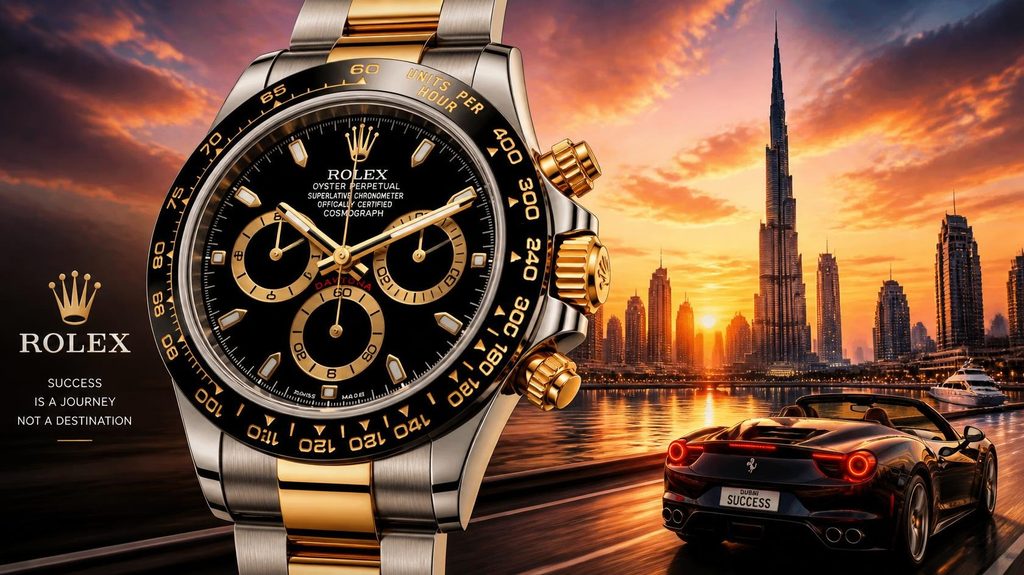
The appeal of a finely crafted watch goes far beyond its ability to tell time. In a world dominated by smartphones, smartwatches, and other connected devices, mechanical timepieces continue to attract enthusiasts who appreciate craftsmanship, engineering, heritage, and enduring design. A traditional watch can be a practical accessory while also serving as a reflection of its owner’s taste and appreciation for precision.
Within this fascinating industry, Rolex has developed a particularly recognizable identity. Its history is associated with technical innovation, durable construction, professional applications, and designs that have remained familiar across generations. Understanding these characteristics provides a useful introduction to the broader world of luxury watchmaking.
A History of Technical Progress
The early twentieth century was an important period in the development of wristwatches. As people increasingly adopted wrist-worn timepieces, manufacturers faced the challenge of creating watches that could withstand everyday conditions without sacrificing accuracy.
Moisture and dust were particularly serious concerns because mechanical movements contain delicate components that can be affected by contamination. Protecting the movement therefore became a major engineering priority.
Rolex contributed to this development through innovations focused on case construction and water resistance. The Oyster case represented a significant step in making a wristwatch more resistant to environmental exposure.
The idea was important because it demonstrated that a wristwatch could combine elegance with practical durability. This principle would remain influential throughout the company’s development.
The Mechanics Behind the Dial
The face of a watch may appear simple, but the mechanism beneath it can be remarkably sophisticated.
A mechanical movement operates through stored energy. The mainspring is wound and then gradually releases energy through a series of gears. An escapement controls the release while the balance assembly regulates the movement’s oscillations.
Every component has a specific function.
The challenge lies in making these tiny parts interact reliably over long periods. Manufacturing tolerances must be carefully controlled, surfaces need appropriate finishing, and the movement must be assembled and adjusted correctly.
This complexity is one reason mechanical watches remain fascinating. They demonstrate how an intricate machine can be reduced to a compact object that can comfortably be worn throughout the day.
Precision Is an Ongoing Pursuit
Mechanical accuracy is influenced by numerous factors.
Temperature changes, physical shocks, magnetism, and the position of a watch can affect how its movement operates. Watchmakers have developed increasingly sophisticated materials and construction techniques to minimize these effects.
Precision manufacturing is particularly important. When components are produced consistently, watchmakers can assemble movements with greater predictability.
Testing and regulation then help ensure that the completed movement performs according to its intended specifications.
The process illustrates an important principle of fine watchmaking: precision is not achieved through a single component. It results from the interaction of many carefully controlled processes.
The Value of Timeless Design
Design longevity is another reason certain watches remain desirable for generations.
Rather than completely replacing established visual identities every few years, Rolex has generally refined its collections gradually. Details may change, but familiar characteristics often remain.
This creates continuity between older and newer models.
A watch from decades ago can still appear connected to contemporary designs, allowing collectors to appreciate the evolution of a particular aesthetic without losing sight of its origins.
Timeless design can also be highly practical. A classic watch is less dependent on temporary fashion trends and can therefore remain appropriate across different occasions.
When Function Influences Aesthetics
Some of the most influential watch designs were created around specific professional requirements.
Divers needed dependable underwater timing. Pilots required clear displays and reliable mechanisms. Explorers and other professionals needed watches capable of functioning in challenging environments.
These requirements influenced everything from case construction to dial visibility.
Today, many owners choose such watches for everyday use rather than professional work. Nevertheless, the original purpose remains an important part of their identity.
A functional feature can therefore become a design signature long after the original problem has changed.
Materials and Durability
Material selection is a critical part of modern watchmaking.
Stainless steel is valued for its strength and resistance to corrosion. Precious metals offer distinctive appearance and weight. Sapphire crystal provides excellent resistance to everyday scratching and protects the dial.
Ceramic is also used in certain applications because of its hardness and resistance to wear.
However, materials alone do not determine quality. The manufacturing process matters just as much.
Components must be precisely machined, carefully finished, and properly assembled. The interaction between material selection and manufacturing quality ultimately determines the durability and appearance of the finished watch.
Entering the Pre-Owned Market
The pre-owned market has become an important destination for watch enthusiasts.
It can provide access to older references, discontinued designs, and examples with unique histories. Vintage watches can be particularly interesting because they reflect the technology and aesthetics of earlier periods.
However, buyers need to examine individual watches carefully.
Condition can vary considerably. A watch may have been heavily worn, polished multiple times, serviced by different technicians, or fitted with replacement components.
Service records and other documentation can provide valuable context. Buyers should also research the specific reference rather than relying only on the general reputation of the brand.
Those exploring luxury watches can find additional information through rolex.
Why Authentication Deserves Attention
The popularity and value of luxury watches make authenticity an important consideration.
Counterfeit products can sometimes reproduce external details convincingly, meaning that a simple visual inspection may not always be sufficient.
Professional authentication can involve examining the movement, case construction, dial, finishing, reference information, and other components.
Purchasing from a reputable source can reduce potential risks, but buyers should still understand what they are purchasing.
Clear documentation and transparent information about a watch’s history are valuable. When an offer appears unusually inexpensive, it is sensible to investigate why rather than assuming the price represents an exceptional opportunity.
Long-Term Watch Care
A mechanical watch is designed for long-term use, but that does not mean it can be neglected.
Its movement contains numerous components that experience continuous movement. Lubricants can degrade, parts can wear, and seals can lose their effectiveness.
Professional servicing can help maintain performance. A qualified watchmaker can inspect the movement, identify worn components, clean and lubricate appropriate parts, and make necessary adjustments.
Water resistance should also be monitored. Seals can deteriorate with age, so owners who regularly expose their watches to water should pay attention to recommended testing and maintenance.
Careful storage and sensible everyday handling can further help preserve a timepiece.
The Personal Side of Watch Ownership
The emotional value of a watch is often just as important as its technical specifications.
A timepiece might be purchased to celebrate a promotion, graduation, anniversary, or another significant event. Over time, it can become closely associated with the memories surrounding that occasion.
Because mechanical watches can remain serviceable for many decades, they can also become family heirlooms.
This possibility gives watch ownership a long-term dimension. Instead of being viewed simply as a consumer product, a well-maintained watch can become an object with its own history.
Signs of use may even add character. A watch that has accompanied its owner for years can carry physical evidence of journeys, milestones, and everyday experiences.
Building Knowledge Before Building a Collection
Watch collecting is most rewarding when it is supported by knowledge.
Understanding movements, model references, materials, complications, case construction, and historical development makes it easier to appreciate meaningful differences between watches.
It also helps collectors discover what they genuinely enjoy.
Some prefer vintage designs and historical references. Others are attracted to modern engineering or professional models. Some value understated aesthetics, while others enjoy distinctive materials and complications.
There is no universal formula for a successful collection.
The most interesting collections often reflect the individual personality of their owner rather than simply following market trends.
Making a Sensible Purchase
Before purchasing an expensive watch, it is worth considering how it will actually be used.
An everyday watch may need versatility and durability, while a collector’s piece may be selected primarily for its historical or technical significance.
Comfort should not be overlooked. Case diameter, thickness, bracelet design, weight, and proportions can significantly influence the wearing experience.
For pre-owned watches, condition and service history deserve particular attention.
Buyers should also consider future maintenance costs. A luxury mechanical watch is a long-term object, and appropriate servicing should be viewed as part of ownership rather than an unexpected expense.
Why Mechanical Watches Remain Relevant
The continued popularity of mechanical watches may seem surprising when modern technology offers more accurate and multifunctional alternatives.
Yet mechanical watches are not primarily competing with smartphones or smartwatches.
Their appeal comes from craftsmanship and physical engineering. They can be admired as objects, understood as machines, and worn as expressions of personal style.
Rolex represents one of the clearest examples of this enduring appeal. Its combination of engineering development, recognizable design, professional heritage, and long-term brand identity has allowed it to remain prominent in the luxury-watch industry.
Readers interested in exploring the subject further can visit replica rolex.
The Future of Fine Watchmaking
The rise of connected technology has changed the broader watch market, but traditional mechanical watchmaking continues to occupy a distinctive position.
Digital devices are designed around functionality and rapid technological development. Mechanical watches are built around longevity, craftsmanship, and physical interaction.
That difference may become increasingly meaningful as technology continues to advance.
A mechanical watch does not need to compete with a smartphone’s capabilities. Its purpose is different. It provides an opportunity to appreciate a carefully engineered object whose fundamental principles have remained recognizable for generations.
Conclusion
The world of fine watchmaking is built on a remarkable combination of engineering, design, craftsmanship, and history. A mechanical timepiece can contain hundreds of components while maintaining an appearance of simplicity and elegance.
Rolex’s enduring presence demonstrates how these qualities can be combined into a recognizable and lasting identity.
For anyone interested in purchasing or collecting luxury watches, education is an important starting point. Understanding movements, materials, authenticity, condition, maintenance, and design history can lead to more informed decisions and a deeper appreciation of the craft.
Ultimately, the attraction of a quality mechanical watch is not simply its ability to tell time. It is the experience of owning a precisely engineered object that can remain useful, meaningful, and visually relevant for years—or even generations—to come.