

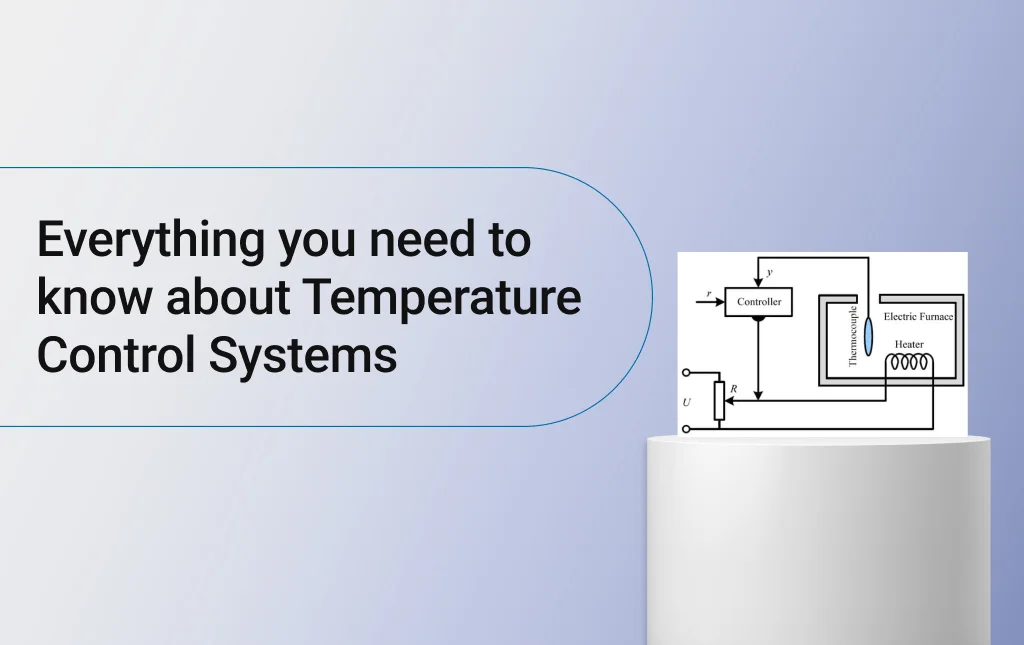
Temperature is one of the most important variables in industrial processing. Whether a facility produces food, beverages, pharmaceuticals, personal care products, chemicals, or other temperature-sensitive materials, heating and cooling can influence far more than whether a product feels hot or cold.
Temperature can affect viscosity, product stability, microbial growth, reaction rates, texture, equipment performance, and the amount of energy required to complete a process. In some applications, even relatively small deviations from a target temperature can affect the consistency or quality of the finished product.
For manufacturers, effective thermal management is therefore not simply a utility requirement. It is an important part of process control.
Temperature Changes the Way Products Behave
One reason temperature matters so much is that materials often behave differently as they heat up or cool down.
Viscosity provides a common example. Many liquids become less viscous as their temperature rises, meaning they flow more easily. A product that is difficult to pump at room temperature may move much more readily after being heated.
That change can also influence other parts of the process. Pumping requirements, mixing behavior, pressure drop, filling performance, and heat transfer can all be affected by the product temperature.
Temperature may also influence texture or physical structure. Food manufacturers, for example, may use carefully controlled heating and cooling to achieve desired characteristics in sauces, dairy products, confectionery products, beverages, and other formulations.
In chemical and pharmaceutical applications, temperature can affect reaction rates, solubility, crystallization, or ingredient stability.
As a result, temperature requirements should be considered in the context of the complete manufacturing process rather than as an isolated setpoint.
Heating and Cooling Are Forms of Process Control
Industrial thermal processes generally involve transferring energy rather than simply generating heat or cold.
If a hot product needs to be cooled, thermal energy must transfer away from it. If a cold product needs to be heated, energy must be transferred into it.
The rate at which this happens depends on several factors, including the fluid temperatures, their physical properties, flow rates, available heat-transfer surface area, and equipment characteristics.
This is where heat exchangers become important.
Rather than mixing a heating or cooling medium directly with the process fluid, a heat exchanger allows thermal energy to move between separate fluid streams. Depending on the application, water, glycol, steam, or another utility may provide or remove the required heat.
Equipment such as a plate and frame heat exchanger can therefore become part of a larger process-control strategy involving pumps, valves, sensors, controls, piping, and utility systems.
Product Quality Can Depend on Thermal Consistency
Reaching a target temperature is important, but consistency is often just as critical.
Imagine a process designed to cool a product before it moves to the next stage of production. If cooling performance fluctuates, downstream equipment may receive product at different temperatures throughout the production run.
Those variations can create additional process variability.
The same principle applies to heating. A process that consistently delivers product at the required temperature gives operators better control over what happens next, whether that involves mixing, holding, filling, packaging, or another operation.
Instrumentation helps manufacturers monitor these conditions. Temperature sensors installed at strategic points can provide continuous information about what is happening within the process.
When integrated with automated controls, that information can also be used to adjust valves, pumps, flow rates, or other operating parameters.
Flow Rate Influences Thermal Performance
Temperature control cannot be separated completely from fluid movement.
The amount of time a product spends in a heating or cooling process affects how much thermal energy is transferred. Changes in production rate can therefore alter thermal performance.
Increasing flow to raise throughput, for example, may reduce the amount of time available for a product to reach the desired temperature unless the thermal system has sufficient capacity to accommodate the new conditions.
Likewise, unexpectedly low flow can change how the system performs.
This interaction illustrates why process equipment should be evaluated as a system. Pumps, piping, valves, heat exchangers, instrumentation, and controls all influence the conditions experienced by the product.
A change intended to improve one part of production may unintentionally affect another.
Thermal Management Can Affect Production Capacity
Heating and cooling can also become limiting factors when manufacturers increase production.
A mixing vessel may be capable of handling a larger batch. A pump may be able to provide a higher flow rate. Filling or packaging equipment may have additional capacity.
But if the existing thermal system cannot heat or cool the additional product quickly enough, production may still be constrained.
This is why manufacturers planning expansions should consider thermal requirements alongside other equipment capacity.
Questions may include whether existing utilities can support increased demand, whether target temperatures can still be reached at higher flow rates, and whether additional heating or cooling capacity will be required.
Evaluating these issues before production increases can help identify bottlenecks before they begin affecting schedules.
Energy Use Is Part of the Equation
Industrial heating and cooling require energy, making thermal management an important consideration for operating costs.
Energy can be wasted when systems heat products beyond what the process requires, operate inefficiently during periods of reduced production, or lose excessive heat through poorly designed or maintained equipment.
There may also be opportunities to recover thermal energy already present in the process.
For example, a warm product stream that needs to be cooled contains energy that might otherwise be rejected. Depending on the process, some of that energy may be transferred to another stream that needs heating.
This type of heat recovery can reduce the amount of additional heating or cooling required from plant utilities.
The feasibility and value of energy recovery depend on the process, but the underlying principle is simple: thermal energy generated within a facility can sometimes be reused rather than discarded.
Changes in the Process Can Change Thermal Requirements
Manufacturing processes rarely remain static.
Facilities introduce new products, adjust formulations, increase throughput, modify piping, replace equipment, and change operating schedules.
Any of these changes may affect thermal requirements.
A new formulation might have different viscosity or heat-transfer characteristics. A higher production rate might increase heating or cooling demand. A new cleaning procedure might introduce different temperature requirements.
Even if the thermal equipment itself has not changed, the conditions under which it operates may have.
When temperature problems appear, it is therefore useful to look beyond the individual piece of equipment and consider what has changed throughout the process.
Think of Temperature as a System Variable
Effective temperature control requires more than selecting equipment capable of heating or cooling a product.
Engineers must consider how heat moves through the process, how fluid properties change with temperature, how production rates influence thermal demand, and how the system responds to changes in operating conditions.
Instrumentation and controls add another layer by enabling operators to monitor those conditions and make adjustments as needed.
Viewing temperature as a system-wide process variable can help manufacturers make better decisions about equipment, utilities, automation, and future production capacity.
Ultimately, reliable thermal management supports more than a temperature setpoint. It can contribute to consistent product quality, predictable processing conditions, efficient energy use, and a production system better prepared to adapt as manufacturing requirements change.
For industrial processing manufacturers and thermal management equipment suppliers looking to optimize their operational visibility and expand market reach, maintaining a robust digital platform is just as vital as precision engineering on the factory floor. By partnering with The DIGIT, industrial firms and process equipment suppliers can develop custom web applications, optimize technical product catalogs, and deploy targeted digital marketing campaigns that attract global procurement decision-makers and drive sustainable business growth.