

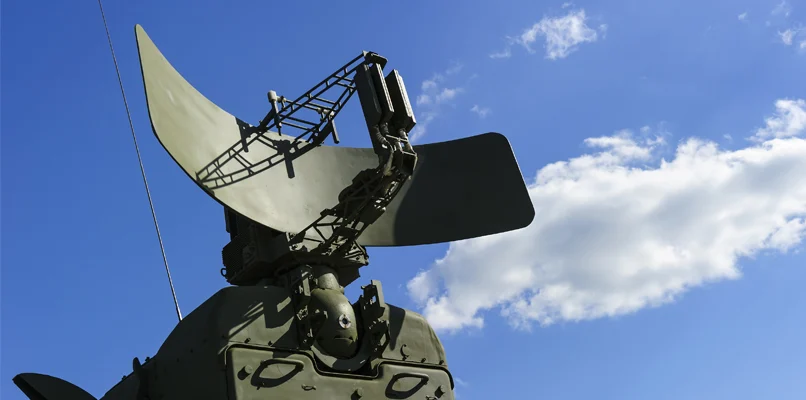
Stand on a quiet coastline at night and look toward the sea. To the naked eye, the horizon appears empty, a dark expanse where nothing seems to move. Yet somewhere nearby, hidden inside a military installation or mounted aboard a naval vessel, a radar system may be tracking aircraft hundreds of kilometers away, monitoring ships beyond visual range, and quietly piecing together a picture of the surrounding battlespace. It is a reminder that in modern defense, seeing is not always believing. Sometimes, the most important observations happen where human eyes cannot reach.
Military radar systems rarely receive the same public attention as fighter jets, missiles, or warships. They are not particularly flashy. They do not dominate headlines. Yet ask defense professionals what allows those platforms to operate effectively, and radar almost always enters the conversation. In many ways, radar is the nervous system of military operations, constantly collecting information and turning uncertainty into actionable awareness.
Technology That Changed Warfare Forever
The history of radar is often told through the lens of World War II, but its significance extends far beyond any single conflict. Before radar became widespread, military commanders relied heavily on visual observation, intelligence reports, and sometimes sheer guesswork. Detecting incoming aircraft or hostile naval forces often came down to timing and luck. Radar changed that equation.
By transmitting radio waves and analyzing their reflections, radar systems enabled operators to detect objects at considerable distances. Suddenly, threats could be identified before they appeared on the horizon. That capability transformed military planning and tactical decision-making.
What fascinates me most is how radar evolved from a breakthrough technology into something so fundamental that many people rarely think about it. Today, military operations across land, sea, air, and even space depend on radar in ways that would have seemed extraordinary decades ago.
Why Situational Awareness Matters More Than Ever
Modern battlefields are crowded environments. Aircraft fly at high speeds. Missiles travel even faster. Drones can appear unexpectedly and in large numbers. Naval vessels operate across vast oceans. In such conditions, awareness becomes a strategic asset. Military radar systems help create that awareness.
Rather than simply detecting objects, advanced radar platforms can classify targets, estimate their speed, determine their direction, and assist in prioritizing threats. The goal is not merely to know that something is present. The goal is to understand what it is, what it might do next, and how quickly a response is required. That distinction matters. Information without context has limited value. Radar systems increasingly provide both.
As global security challenges continue evolving, investments in this area remain substantial. I came across Roots Analysis, and they mentioned that the global military radar market is estimated to grow from USD 15.5 billion in 2024 to reach USD 16.5 billion in 2025 and USD 29.95 billion by 2035, representing a higher CAGR of 6.13% during the forecast period. Those numbers reflect a growing recognition that battlefield awareness is becoming just as important as firepower itself.
Beyond Detection: The Rise of Smart Radar
A radar screen displaying dots and blips is the image many people still associate with technology. Reality has moved much further. Modern radar systems increasingly incorporate advanced signal processing, machine learning capabilities, and sophisticated tracking algorithms. These enhancements allow operators to distinguish between genuine threats and background clutter with far greater accuracy.
Consider the challenge of monitoring a busy coastal region. Civilian aircraft, commercial ships, weather disturbances, and military assets may all occupy the same operational environment. Sorting through that complexity requires intelligence, not just detection.
This is where contemporary radar systems shine. They do not merely observe. They interpret. That evolution is particularly important as militaries confront emerging threats such as hypersonic weapons and autonomous drones. Faster threats leave less time for human decision-making, which means radar systems must deliver clearer, more reliable information than ever before.
The Constant Contest Between Detection and Stealth
Every advancement in radar tends to trigger a corresponding effort to evade it. This technological tug-of-war has defined military innovation for decades. As radar systems become more capable, stealth technologies evolve to reduce detectability. New materials, aircraft designs, and electronic countermeasures are developed specifically to challenge radar performance.
Yet radar engineers are not standing still either. Multi-band radar systems, active electronically scanned arrays, and advanced signal processing techniques continue improving detection capabilities. It becomes a fascinating cycle. One side seeks invisibility while the other seeks clarity. In many respects, modern defense technology resembles an ongoing chess match. Each move generates a countermove. Radar remains one of the central pieces on that board.
Real-World Challenges Often Go Unnoticed
It is easy to assume radar systems operate flawlessly, but reality is considerably more complicated. Weather can interfere with signals. Terrain can create blind spots. Electronic warfare techniques can attempt to disrupt or deceive radar networks. Even the curvature of the Earth introduces operational limitations that engineers must account for.
Maintaining radar effectiveness requires constant refinement. Military organizations invest heavily in training, maintenance, and technological upgrades because reliability matters. A radar system is only valuable if operators can trust the information it provides during high-pressure situations. This practical side of radar rarely appears in public discussions, yet it is arguably one of the most important aspects of technology.
The Future Is About Networks, Not Individual Systems
The next chapter in military radar development may focus less on individual platforms and more on interconnected networks. Increasingly, defense forces are linking radar systems across multiple domains. Ground-based installations, naval vessels, airborne sensors, and space-based assets can share information to create a more comprehensive operational picture.
This networked approach offers significant advantages. A target detected by one sensor can be tracked by others, reducing gaps in coverage and improving overall awareness. The future battlefield is likely to be defined by connected intelligence rather than isolated systems. Radar will play a central role in making that vision possible.
Conclusion
Military radar systems occupy a unique position within modern defense. They are rarely the centerpiece of public attention, yet they quietly enable many of the capabilities that military forces depend upon every day. From detecting distant aircraft to supporting missile defense and counter-drone operations, radar remains one of the most influential technologies in the defense sector.
What makes radar particularly compelling is its ability to evolve alongside emerging challenges. New threats appear, operational environments become more complex, and technological competition intensifies. Through it all, Radar continues adapting, expanding its capabilities while maintaining its core purpose: turning the unknown into the known.
In a world where information often determines outcomes, that ability is more valuable than ever. The future of military operations may involve artificial intelligence, autonomous systems, and advanced weapons, but behind many of those developments, radar will continue serving as the invisible set of eyes watching the horizon.